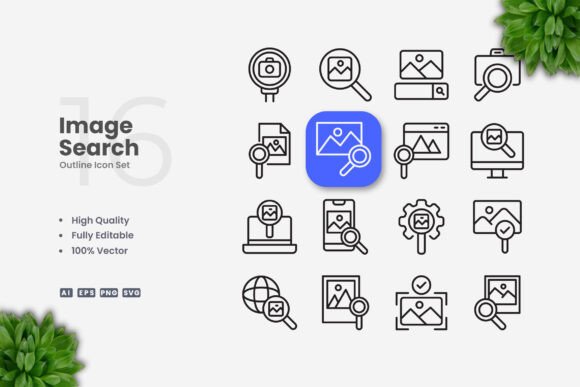
Image Search Icons for Streamlined Design Workflows
Image search icons are a versatile tool that can enhance the visual communication of any project, whether it's for a website, mobile app, or print material. These icons serve as intuitive representations of search functions, making them essential in user interface (UI) and user experience (UX) design. Their simplicity and clarity ensure that users can quickly understand their purpose, regardless of the platform or medium.
When integrated into a broader design process, image search icons contribute to a more cohesive and functional layout. They can be used during the planning phase to define navigation elements, during the development stage to implement interactive features, or after a project is launched to refine and optimize the user experience.
Understanding the Role of Image Search Icons
Image search icons are not just decorative elements; they are functional components that guide users through digital and physical spaces. In web design, they often appear in search bars, menus, or sidebars, helping users locate information efficiently. For mobile apps, they can be part of the main navigation, allowing users to access search features with a single tap.
In print materials like flyers or posters, image search icons can be used to direct attention to key sections or highlight important information. When designing for social media or infographics, these icons add a visual hierarchy that makes content more digestible and engaging.
The effectiveness of image search icons depends on their design quality and consistency. High-quality icons maintain clarity at different sizes and resolutions, ensuring they remain legible across various platforms. This makes them ideal for use in both digital and print formats without compromising visual integrity.
Key Features of Image Search Icons
One of the most valuable aspects of image search icons is their adaptability. With 100% vector format, these icons can be resized without losing quality, making them suitable for a wide range of applications. Whether you're designing for a high-resolution display or a small mobile screen, the icons will retain their sharpness and detail.
Customization is another critical feature. Users can easily change colors, adjust stroke weights, and modify other visual elements using vector software such as Adobe Illustrator or CorelDRAW. This flexibility allows designers to align the icons with brand guidelines or specific project requirements.
Additionally, the availability of multiple file formats ensures compatibility with different design tools and platforms. Source files in AI and EPS allow for advanced editing, while SVG and PNG files provide ready-to-use options for web and mobile applications. The inclusion of a Readme.txt file also helps streamline the setup process, ensuring that users can quickly access and utilize the icon set.
Integrating Image Search Icons into Your Workflow
Before starting a design project, it's beneficial to plan how image search icons will be used. Consider the context in which they will appear and how they will interact with other elements. For example, if you're working on a website, think about where the search function will be located and what kind of icon best represents that action.
During the implementation phase, image search icons can be placed within the UI framework to improve usability. Ensure that they are positioned consistently across all pages or screens, maintaining a uniform look and feel. This consistency helps users navigate the interface more intuitively.
After the project is complete, image search icons can be refined based on user feedback or performance data. If certain icons are not being used as expected, consider adjusting their placement or appearance to better meet user needs. This iterative approach ensures that the icons continue to serve their intended purpose effectively.
Best Practices for Using Image Search Icons
To maximize the impact of image search icons, follow these practical tips:
- Choose clear and recognizable designs. Avoid overly complex or abstract shapes that may confuse users.
- Maintain consistent sizing and spacing. Icons should be proportionate to other elements on the page or screen.
- Use appropriate color schemes. Select colors that align with your brand or the overall design theme.
- Test icons across different devices and platforms. Ensure they remain visible and functional on various screen sizes and resolutions.
- Document your design choices. Keep track of how and where icons are used to maintain consistency over time.
Collaboration and Team Integration
When working with a team, image search icons can serve as a shared resource that simplifies the design process. By using a standardized icon set, team members can ensure that all visual elements align with the project's goals and style guidelines.
Designers, developers, and content creators can collaborate more efficiently when they have access to a consistent set of icons. This reduces the need for custom design work and streamlines the implementation process. Additionally, having editable source files allows team members to make adjustments as needed without relying on external resources.
For businesses, integrating image search icons into internal workflows can improve productivity and reduce design-related delays. By investing in a high-quality icon set, companies can ensure that their digital assets remain professional and user-friendly across all touchpoints.
Long-Term Use and Maintenance
Image search icons are not just useful for one-time projects; they can be reused across multiple initiatives, saving time and effort in the long run. As your brand or business evolves, you can update or expand your icon library to reflect new design trends or user preferences.
Maintaining a well-organized icon collection is essential for efficient use. Store files in a centralized location, categorize them by type or function, and keep documentation up to date. This organization ensures that icons can be quickly accessed and applied whenever needed.
Regularly reviewing and updating your icon set can also help maintain its relevance and effectiveness. As user behavior and design standards change, your icons should adapt to meet these evolving needs.