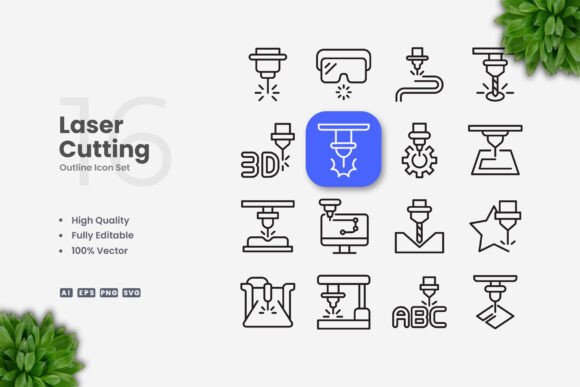
Laser Cutting Icons for Modern Design Workflows
Laser cutting icons are a powerful tool for designers, developers, and creators looking to enhance visual communication across multiple platforms. These icons serve as essential elements in digital and physical design projects, offering clarity, consistency, and adaptability. Whether you're working on a website, mobile app, book layout, or social media content, laser cutting icons provide a streamlined way to convey meaning through simple, clean visuals.
Understanding Laser Cutting Icons
Laser cutting icons refer to vector-based graphics designed specifically for precision cutting using laser technology. These icons are often used in signage, product labeling, and custom design elements where accuracy and detail matter. However, their utility extends beyond just physical applications. In the digital realm, they function as scalable, editable, and high-quality assets that integrate seamlessly into various design workflows.
The key advantage of laser cutting icons lies in their ability to maintain quality at any size. This makes them ideal for use in both large-format prints and small digital interfaces. Their clean lines and minimalistic style ensure they remain legible and visually appealing regardless of context.
Integration into Design Processes
Laser cutting icons can be incorporated into a project at multiple stages. Before starting a design, they help establish a visual language that aligns with the project's goals. During development, they serve as placeholders or final assets depending on the stage of the workflow. After completion, they support ongoing updates, rebranding efforts, or cross-platform consistency.
For example, a web developer might use laser cutting icons during the prototyping phase to test navigation layouts. A graphic designer could apply them in a print campaign to maintain brand coherence. An educator might include them in infographics to simplify complex information for students.
Workflow Considerations
When integrating laser cutting icons into your workflow, consider factors like compatibility, scalability, and customization. Most icons come in multiple file formats, including AI, EPS, SVG, and PNG, ensuring they work across different software and platforms. This flexibility allows for easy editing and adaptation to specific needs.
Additionally, the availability of source files means you can adjust colors, stroke weights, and other properties without losing quality. This level of control is especially useful when aligning icons with existing brand guidelines or making last-minute changes.
Practical Use Cases
Laser cutting icons are versatile and applicable in numerous scenarios. For instance, in a mobile app, they can represent functions like settings, notifications, or search. On a website, they can guide users through menus or highlight key features. In print materials such as flyers or posters, they add visual interest while maintaining a professional look.
They also play a role in educational content. Teachers and instructional designers can use these icons to create engaging learning materials, such as diagrams, charts, or interactive lessons. Their simplicity ensures they don’t distract from the main message but instead support it effectively.
Collaboration and Team Workflow
In team environments, laser cutting icons streamline collaboration by providing a shared visual resource. Designers, developers, and content creators can access the same set of icons, reducing inconsistencies and saving time. This is particularly beneficial in remote teams where clear communication is crucial.
Moreover, the ease of drag-and-drop integration means that non-designers can also contribute to the design process. Whether it’s a marketing professional adding icons to a social media post or a student creating a presentation, the accessibility of these assets promotes efficiency and creativity.
Preparing for Use
Before using laser cutting icons, it’s important to prepare them correctly. This includes checking file formats, ensuring they match your project’s resolution requirements, and verifying that they align with your brand’s aesthetic. Some icons may need minor adjustments to fit specific layouts or color schemes.
For optimal results, always keep backup copies of original files. This helps prevent data loss and allows for future edits without relying on external sources. Additionally, organizing icon sets into folders or libraries improves workflow efficiency, especially when working on large-scale projects.
Quality Control and Consistency
Maintaining consistency is vital when using laser cutting icons across different mediums. Ensure that all icons follow the same design principles, such as line weight, spacing, and proportion. This creates a cohesive look and avoids visual clutter.
Regularly review how icons perform in different contexts. For example, check if they remain visible against varying backgrounds or if they scale properly on mobile devices. Addressing these issues early prevents potential problems down the line.
Long-Term Use and Updates
Laser cutting icons are not just one-time assets; they can be reused and updated as needed. As your brand evolves or new design trends emerge, you can modify existing icons or replace them with updated versions. This adaptability ensures your visual identity remains relevant and effective over time.
Staying informed about industry standards and user preferences also helps in making informed decisions about icon selection and modification. Regularly reviewing feedback from users or stakeholders can guide improvements and refinements.
Conclusion: Enhancing Visual Communication
Laser cutting icons offer a practical solution for enhancing visual communication in a wide range of applications. Their clean design, high quality, and customization options make them an essential part of modern design workflows. By understanding how to integrate and use them effectively, creators and professionals can improve the clarity, consistency, and impact of their work.
Whether you're designing for digital or physical mediums, laser cutting icons provide a reliable and flexible tool that supports both creative and functional goals. With proper preparation, organization, and attention to detail, they can become a valuable asset in your design toolkit.