Screen Recording Icons for Every Creative Need
Whether you're designing a website, creating social media content, or working on a presentation, screen recording icons can be a valuable addition to your visual toolkit. These icons are more than just decorative elements—they serve as clear, intuitive symbols that help users understand what an action will do. From mobile apps to print materials, screen recording icons offer versatility and clarity in a variety of contexts.
What Are Screen Recording Icons?
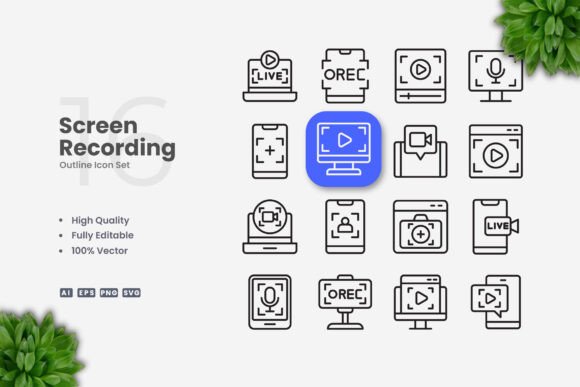
Screen recording icons are graphical representations that indicate the ability to record a screen. They often feature a camera or a circle with a dot inside, symbolizing the start of a recording. These icons are designed to be simple and clean, making them easy to recognize at a glance. Their minimalist approach ensures they fit well into different design styles without overwhelming the overall look.
Unlike more complex icons, screen recording icons focus on clarity and function. This makes them ideal for use in digital interfaces where space is limited and user understanding is key. Whether you're building a productivity app or adding visual cues to a tutorial, these icons can help guide users through the process.
Where and When to Use Screen Recording Icons
Screen recording icons are incredibly versatile. They can appear in a variety of settings, from websites and mobile apps to educational materials and marketing campaigns. For example, if you're developing a video editing tool, using a screen recording icon next to a "record" button helps users quickly identify its purpose. Similarly, in a blog post about online learning, an icon can visually reinforce the idea of capturing lessons or tutorials.
These icons also work well in print and digital formats. A flyer promoting a webinar might include a screen recording icon to signal that attendees can record the session. In a magazine article about remote work, an icon could be used to highlight tips on how to record screen sessions for documentation or sharing.
Another common use case is in social media. If you're creating a video tutorial or a step-by-step guide, a screen recording icon can help viewers know that the content involves capturing screen activity. This is especially useful for platforms like YouTube, Instagram, or TikTok, where visual cues play a big role in user engagement.
Real-World Applications Across Different Fields
For educators, screen recording icons can be part of lesson plans or e-learning modules. Imagine a teacher creating a video lesson on how to use a new software tool. Adding a screen recording icon next to the video thumbnail gives students a quick visual cue that the content includes a recorded demonstration.
Entrepreneurs and small business owners might use these icons when launching a product demo or a customer support tutorial. For instance, a SaaS company offering a project management tool could use a screen recording icon in their onboarding process to show users how to capture and share their workflow.
Freelancers and designers often rely on screen recording icons to communicate features in their work. A graphic designer creating a portfolio site might use one to indicate that a particular project includes a recorded walkthrough. This not only adds a professional touch but also enhances user experience by setting clear expectations.
Marketers can also benefit from these icons. In a campaign promoting a new app, a screen recording icon can be used in ad visuals to suggest that the app allows users to record their screen for sharing or documentation. This subtle visual element can make the product more appealing and easier to understand.
Why Simplicity Matters in Icon Design
The power of screen recording icons lies in their simplicity. A clean, uncluttered design ensures that the icon remains recognizable across different sizes and resolutions. This is especially important for digital products where icons may appear on both large screens and small mobile devices.
Simple designs also allow for greater flexibility. You can easily change colors, adjust stroke weights, or resize the icon without losing quality. This makes them perfect for use in various projects, from web banners to printed materials. Whether you're working with Adobe Illustrator or CorelDRAW, the vector format ensures that the icon maintains its sharpness and clarity no matter how it's scaled.
Moreover, a minimalist approach reduces visual noise, making the icon more effective in its purpose. Instead of distracting the user with unnecessary details, a simple design focuses on the core message: the ability to record a screen.
Choosing the Right Icon for Your Project
Before selecting a screen recording icon, consider the context in which it will be used. For a professional app, a more refined and polished icon may be appropriate. In contrast, a casual blog post or social media post might benefit from a more playful or stylized version.
Also, think about the audience. If your users are primarily tech-savvy, a standard icon may be sufficient. However, if your audience is less familiar with digital tools, a more descriptive or explanatory icon might be better. The goal is to ensure that the icon communicates its meaning clearly and effectively.
Finally, make sure the icon aligns with the overall design language of your project. If your brand uses a modern, sleek aesthetic, choose an icon that matches that style. This consistency helps create a cohesive and professional look across all elements of your work.
Final Thoughts on Screen Recording Icons
Screen recording icons are more than just visual elements—they’re functional tools that enhance user experience and communication. Whether you're building a website, creating educational content, or designing marketing materials, these icons can add value in meaningful ways.
With their high-quality design, customizable features, and compatibility with various file formats, screen recording icons offer a practical solution for a wide range of creative and professional needs. By choosing the right icon and using it effectively, you can improve clarity, engagement, and usability in your projects.