Hygiene Icons: Streamlining Visual Communication in Every Workflow
In today's fast-paced digital and physical environments, clear and effective visual communication is essential. Hygiene Icons offer a powerful solution for professionals and creators who need to convey important information quickly and consistently. These icons are designed with simplicity and clarity in mind, making them ideal for a wide range of applications—from websites and mobile apps to print materials and social media content.
Understanding Hygiene Icons and Their Role in Visual Design
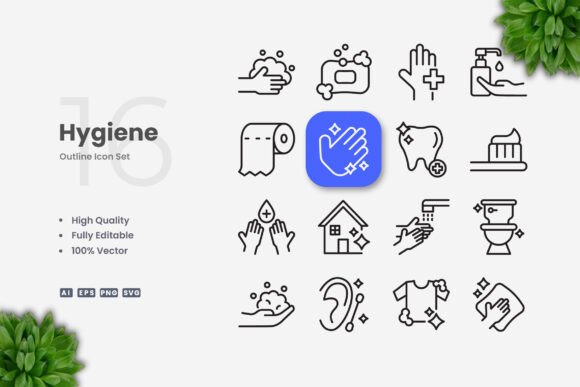
Hygiene Icons are a collection of vector-based graphics that represent concepts related to cleanliness, health, and personal care. They are designed to be universally recognizable, ensuring that users from different backgrounds can easily understand their meaning. This makes them particularly useful in settings where clear communication is critical, such as healthcare facilities, public spaces, and educational institutions.
These icons fit seamlessly into broader design processes, serving as visual aids that enhance user experience and improve the overall effectiveness of communication strategies. Whether you're creating a website, designing an app interface, or developing marketing materials, Hygiene Icons can help you convey key messages without relying solely on text.
Practical Applications of Hygiene Icons in Different Projects
Hygiene Icons can be used at various stages of a project, from initial planning to final implementation. Before starting a design project, they can help define the visual language and ensure consistency across all materials. During the development phase, they can be integrated into wireframes, prototypes, and final designs to maintain a cohesive look and feel.
After a project is completed, Hygiene Icons can be used for ongoing updates, revisions, and maintenance. Their editable nature allows for easy adjustments, ensuring that your visual assets remain relevant and up-to-date. This flexibility is especially valuable in dynamic environments where design needs may change frequently.
Integration with Other Tools and Resources
Hygiene Icons work well with a variety of design tools and platforms, making them a versatile addition to any workflow. Vector software like Adobe Illustrator and CorelDRAW allow for easy resizing, color changes, and stroke weight adjustments, giving designers full control over the final appearance of the icons. This level of customization ensures that the icons can be adapted to fit different styles, branding guidelines, and project requirements.
Additionally, the availability of multiple file formats—including AI, EPS, SVG, and PNG—makes it easy to use these icons in different contexts. Whether you're working on a digital project that requires scalable vector graphics or a print material that needs high-resolution images, Hygiene Icons provide the necessary flexibility and quality.
Workflow Tips for Using Hygiene Icons Effectively
To get the most out of Hygiene Icons, consider the following practical tips:
- Plan ahead: Identify the specific hygiene-related concepts you need to represent and select the appropriate icons. This helps avoid confusion and ensures that your visual communication is accurate and consistent.
- Use a style guide: Establish a set of design rules for color, size, and placement to maintain visual harmony across all materials. This is especially important when using Hygiene Icons in multi-platform projects.
- Test for clarity: Ensure that the icons are easily understandable by testing them with real users. This helps identify any potential issues and improves the overall effectiveness of your design.
- Keep it simple: Avoid overcomplicating your design by using only the necessary icons. A clean and minimal approach often leads to better user engagement and comprehension.
Enhancing Usability and Consistency Across Platforms
One of the key benefits of Hygiene Icons is their ability to maintain consistency across different platforms and mediums. Whether you're designing for a website, a mobile app, or a printed brochure, the icons can be scaled and adapted without losing quality. This ensures that your visual identity remains strong and recognizable, regardless of where your audience encounters it.
Consistency is also important when it comes to usability. By using a standardized set of icons, you can reduce cognitive load and make it easier for users to navigate through your content. This is particularly beneficial in environments where quick decision-making is required, such as in healthcare or emergency response scenarios.
Long-Term Use and Maintenance
Hygiene Icons are designed with long-term use in mind. Their high-quality vector format ensures that they remain sharp and clear at any size, making them suitable for both current and future projects. This longevity reduces the need for frequent redesigns and helps maintain a professional appearance over time.
Maintaining a library of Hygiene Icons can also streamline your design process. By organizing your icons in a centralized location, you can quickly access and reuse them across different projects. This not only saves time but also ensures that your visual assets remain cohesive and aligned with your brand identity.
Conclusion: Leveraging Hygiene Icons for Effective Communication
Hygiene Icons are more than just visual elements—they are essential tools for effective communication in a wide range of contexts. By integrating them into your workflow, you can enhance clarity, improve usability, and maintain consistency across all your projects. Whether you're a designer, marketer, educator, or business owner, these icons offer a practical and efficient way to convey important messages with ease.